Könyvajánló
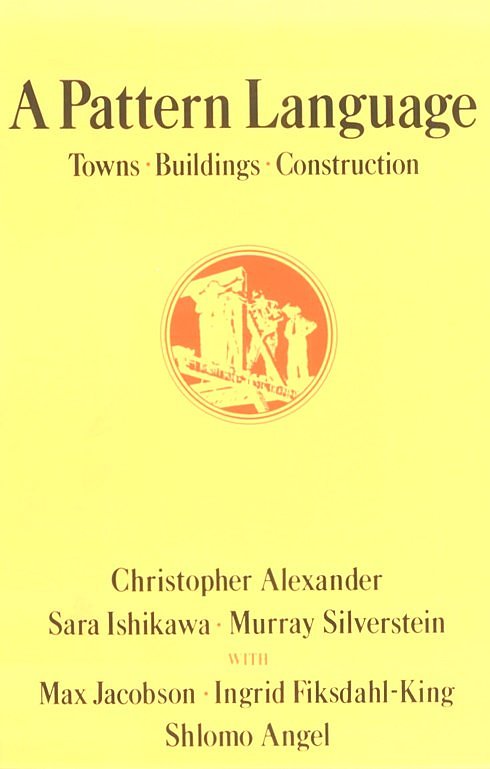
A pattern language : Towns, buildings, construction
Alexander, Christopher
I borrowed his copy and took it home that night. Initially it looked huge and impenetrable, but once I had read the ‘key’ at the beginning, I flew through the book in a couple of hours. What blew me away was not the these ideas were in any sense revolutionary or new, but rather that it captured and put its fingers on so many things that I had felt and been unable to articulate. Why do some built environments make you feel alive, connected and celebratory, and why do some make people want to stab each other? Why does the heart soar in the old parts of Sienna, in St Ives, in Paris, and not in most of Swindon or Slough?
Alexander’s observation was that any built environment is like a ‘language’, it is composed of different identifiable elements, some obvious, some subtle, and like any language, it can be used to write beautiful poetry or doggerel. Alexander put it like this; “the elements of this language are entities called patterns. Each pattern describes a problem which occurs over and over again in our environment, and then describes the core of the solution to that problem , in such a way that you can use this solution a million times over, without ever doing it the same way twice”.
Since ‘A Pattern Language’ was published, the idea of pattern languages has gone on to inform the software world, web design and many other disciplines. Author J.K.Rowling talks of how the whole story for her Harry Potter books, with fully formed characters, names and events, came to her on a train journey from Edinburgh to London. The idea for a Transition Pattern Language came from discussions between Ben Brangwyn, Ed Mitchell and myself on a train journey from Totnes to Slaithwaite in Yorkshire for the Transition North conference. It struck us that it was a perfect way of redefining and communicating Transition. If it could be applied in areas other than building, then why not Transition?
For me, in terms of music, the best music opens doors to lots of other music you have not heard before, sends you off exploring previously unheard music. My hope is that communicating Transition in this way will do the same, not least in terms of perhaps getting you to pick up a copy of ‘A Pattern Language’, one of few books published in the 20th Century that deserves to be called a work of genius.