Könyvajánló
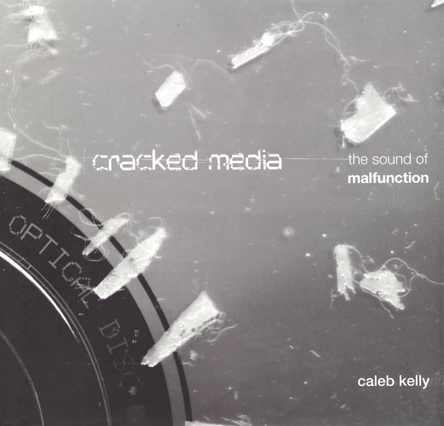
Cracked media : the sound of malfunction
Kelly, Caleb
Kelly offers us an engaging survey of these practices, which have ancestors in the work of the futurist Luigi Russolo and composer John Cage, going on to inspire the Czech Fluxus artist Milan Knížák and Nam June Paik, and finding their contemporary avatars in figures as varied as Christian Marclay, Yasunao Tone, Nicolas Collins, Paul DeMarinis and Kim Cascone. As an intriguing point of intersection and contrast, Kelly also discusses hip-hop “scratching” and the work of the German band Oval, which orchestrates CD glitches as rhythmic elements in a new species of trance-dance electronica at the more sophisticated edge of popular music.
Whether involving recording or playback, and wherever situated on the range from infra- to ultra-audible, what all these instances of cracked media have in common is their reflexive use of the media of sound reproduction. In a new twist on artistic modernism, they make media themselves the intentional object of artistic “composition” and audience listening. Bringing to audibility the material presence of reproductive mediation itself, they offer singular points of entry into a parallel soundscape nested in the continuum of mediatized sound in which we live, the commodified tremors of air propagated through automobiles, rooms and ear canals from speakers great and small. Cracked media reveal for us the features of this interstitial world in which the putatively empty, silent spaces of our media architectures suddenly come alive with teeming masses of unperceived voices.
Although more a matter of connotation than something intrinsic to cracked media themselves, their potential to reveal the latent and marginal can also lend them distinctly social-critical overtones. Some of the eerie sounds emanating from recording flaws can seem the aural equivalent of the hidden subway denizens of Douglas Cheek’s satirical pulp movie masterpiece C.H.U.D. (Cannibalistic Humanoid Underground Dwellers) or Marc Singer’s more earnestly political documentary about Manhattan subway tunnel dwellers, Dark Days. Nor, recalling the original etymological sense of apocalypse as “making hidden things seen,” should we be surprised that reproductive media, brought to their destructive end, can help make heard a brewing Armageddon in an over-mediated world.