Könyvajánló
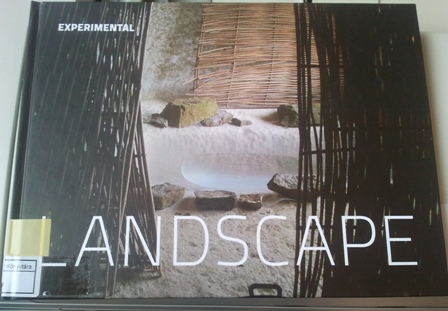
Experimental Landscape
Prof. Colin Foster
Experimental Landscape-Foreword
During the course of my teaching here in Pécs I came to realise that changes in Hungarian society and way of life have also caused radical changes in the fine arts. Young artists, and indeed young students, seem to be showing an interest in areas which gained popularity during my time as a student in England between 1972 and 1977. Particularly I witness a new interest in what we then called, "Land Art" - today perhaps better described as "Nature Art" - and also in Public Art, a denomination that may be understood in many ways. My personal interest in Land Art dates back to 1970 when, as a landscape-painting schoolboy, I began to realise that the potential of landscape depiction might be extended and that, instead of being merely topographical, it might also encompass ecological issues and the land itself act as a space for physical and intellectual intervention. As a result of demands from the students of the Faculty of Music and Visual Arts at the University of Pécs I began to hold a Land Art seminar. The form of this seminar has gone through many changes over the years, but it has always been characterised by openness. From the beginning the seminar was adverstised for students on our doctoral programme, but many topics such as the depiction of landscape, gardens and park-design, alongside the brief history of Land Art and its precedents. In 2009 I had three invitations to take part in Nature Art workshops in different parts of Hungary with my students deserve special mention. Atilla Pokorny took part in the first of these seminars and has been an almost constant presence over the years. Despite not being under my tutorship on the doctoral programme Land Art began to take a major role in his oeuvre as he produced many works in the landscape in his native Romania, in Sicily and elsewhere. Csongor Szigeti, now on my doctoral programme, arrived with a significant background in this field. I have also included works made by myself. I make no claim for these as art works, and in fact finc them somewhat trivial compared to my normal activity as a sculptor. They are perhaps however valuable as examples of playfulness, for it is my aim always to open the minds of the students and also to make them aware of the importance of place and the ways in which we may demark. It is particularly rewarding to see that in times of virtual reality (and many of the featured students are particularly strong in this area too) the 'natural' environment - and our human relationship to i - is still an important issue for these young, ambitious people. This, for me, is a sign of great hope, as it will ultimately be their challenge to finally create a sustainable relationship with the planet. Prof. Colin Foster, Nagynyárád, Hungary, 2011.