Könyvajánlók
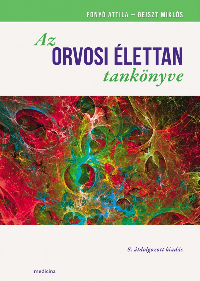
Az orvosi élettan tankönyve
Fonyó Attila - Geiszt Miklós
A könyv megközelítése az első kiadástól kezdődően sejtélettani és
molekuláris szemléletű, és ez a 8. kiadásra is jellemző, e mellett
azonban több változtatást is tartalmaz. Az egyes fejezetek átdolgozása
során igyekeztünk olyan új kutatási eredményeket is a szövegbe foglalni,
amelyek már „kiállták az idő próbáját” és amelyek segíthetik a
különböző szervek, szervrendszerek működésének megértését. Az előző
kiadáshoz képest hangsúlyosabban emeltük ki a klinikai vonatkozásokat,
ami reményeink szerint még érdekesebbé és hasznosabbá teszi az olvasók
számára a könyvet. Az új kiadás számos új ábrát is tartalmaz, és több
korábbi ábrát is módosítottuk. Úgy gondoljuk, hogy a szöveget és az
ábrákat érintő változtatások egyaránt megkönnyítik az élettani
folyamatok megértését.
Ez a könyv elsősorban orvostan- és
fogorvostan-hallgatók számára íródott, azonban szívesen ajánljuk már
végzett orvosok számára is, akik szeretnék felfrissíteni orvosi
élettannal kapcsolatos ismereteiket, vagy olyan olvasóknak, akiket más
okból érdekel az emberi szervezet működése.
tovább >>>
Choral repertoire
Dennis Shrock
- - First comprehensive book on choral repertoire, bringing together information from a wide range of sources
- - Serves a variety of functions: textbook, programming guide, reference tool, and chronological overview
- - Promotes and preserves cultural masterpieces
tovább >>>
Choral conducting
Abraham Kaplan
Abraham Kaplan has created a brilliant and practical textbook for choral conducting teachers and students on the college or conservatory level. His manual allows the instructor to cover every aspect of conducting and rehearsal techniques while giving the student regular opportunities to conduct in the classroom. Following many of the exercises is a list of choral selections from the standard repertoire which the neophyte conductor may use to practice a particular technical problem within a musical context.
tovább >>>
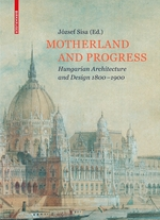
Motherland and progress : Hungarian architecture and design, 1800-1900
József Sisa ed
In the 19th century Hungary witnessed unprecedented social, economic and cultural development. The country became an equal partner within the Dual Monarchy when the Austro-Hungarian Compromise of 1867 was concluded. Architecture and all forms of design flourished as never before. A distinctly Central European taste emerged, in which the artistic presence of the German-speaking lands was augmented by the influence of France and England. As this process unfolded, attempts were made to find a uniquely Hungarian form, based on motifs borrowed from peasant art as well as real (or fictitious) historical antecedents. "Motherland and Progress" – the motto of 19th-century Hungarian reformers – reflected the programme embraced by the country in its drive to define its identity and shape its future.
tovább >>>
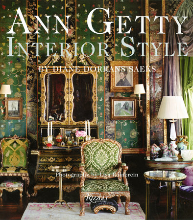
Ann Getty : interior style
Diane Dorrans Saeks
The first-ever compilation of the luxurious interiors from the influential designer and philanthropist Ann Getty. For those who are passionate about fine interiors, the preservation of antiques, the highest level of craftsmanship, and respect for architectural integrity, this book offers an insider’s view of the exquisite designs of Ann Getty...
tovább >>>
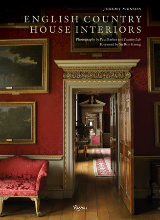
English country house interiors
Jeremy Musson
A highly detailed look at the English country house interior, offering
unprecedented access to England’s finest rooms. In this splendid book,
renowned historian Jeremy Musson explores the interiors and decoration
of the great country houses of England, offering a brilliantly detailed
presentation of the epitome of style in each period of the country
house, including the great Jacobean manor house, the Georgian mansion,
and the Gothic Revival castle. For the first time, houses known
worldwide for their exquisite architecture and decoration--including
Wilton, Chatsworth, and Castle Howard--are seen in unprecedented detail.
With intimate views of fabric, gilding, carving, and furnishings, the
book will be a source of inspiration to interior designers, architects,
and home owners, and a must-have for anglophiles and historic house
enthusiasts.
The fifteen houses included represent the key periods in
the history of English country house decoration and cover the major
interior fashions and styles. Stunning new color photographs by Paul
Barker-who was given unparalleled access to the houses-offer readers new
insights into the enduring English country house style. Supplementing
these are unique black-and-white images from the archive of the esteemed
Country Life magazine...
tovább >>>
Art from the Court of Burgundy, 1364-1419
ed. Barbara J. Bradley et al.
This catalogue – the English language version of L’art à la cour de Bourgogne: le mécénat de Philippe le Hardi et de Jean sans Peur (1364-1419) – accompanied the exhibition commemorating the 600th anniversary of the death of Philip the Bold (1342-1404), the first Valois duke of Burgundy and brother of Charles V, king of France. From the start, some readers may find it somewhat challenging to decipher the rationale behind the organization of the volume’s contents. Unlike standard exhibition catalogues, which generally include a relatively small number of tightly focused essays followed by the complete catalogue, this volume adopts a rather unconventional more is moreapproach. Essays are numerous and brief, and sometimes redundant in subject matter. The catalogue is divided topically, with groups of entries printed in sections with their related essays. Multiple entries are often combined on single pages, and accompanying photographs are not always where the reader might expect or want them to be...
tovább >>>
Gothic architecture
Paul Frankl
This magisterial study of Gothic architecture traces the meaning and development of the Gothic style through medieval churches across Europe. Ranging geographically from Poland to Portugal and from Sicily to Scotland and chronologically from 1093 to 1530, the book analyzes changes from Romanesque to Gothic as well as the evolution within the Gothic style and places these changes in the context of the creative spirit of the Middle Ages..
tovább >>>
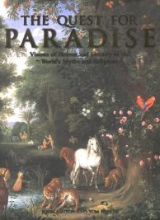
The quest for paradise : visions of heaven and eternity in the world's myths and religions
John Ashton and Tom Whyte
In every culture, in every epoch, human beings have yearned for heaven -- the dwelling place of the gods, mirror of our hopes and desires. Now, in The Quest for Paradise, renowned scholar John Ashton and his colleague Tom Whyte offer an intriguing look at how we have thought of and envisioned heaven and the afterlife, from the ancient cultures of Egypt, Greece, and Rome, to the Christians, Jews, Buddhists, Hindus, and Muslims, as well as the indigenous peoples of the Americas, Australia, and Africa...
tovább >>>
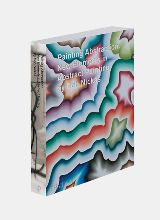
Painting abstraction : new elements in abstract painting
Bob Nickas
In recent years, abstract painting has developed a rich complexity that, more than ever, rewards intensive viewing. Bob Nickas introduces the reader to the key issues in contemporary abstraction while profiling eighty artists who, in the last five years, have made it one of the most exciting areas in contemporary art..
tovább >>>
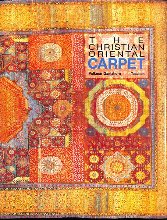
The Christian Oriental carpet : a presentation of its development, iconologically and iconographically, from its beginnings to the 18. century
Volkmar Gantzhorn
In this volume, two and a half thousand years are presented and analysed. The author's research has resulted in completely new insights and relationships - a revision of the history of the oriental carpet...
tovább >>>
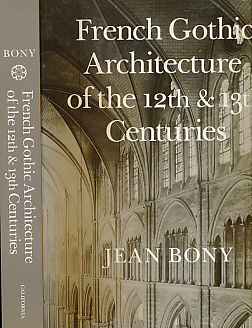
French Gothic architecture of the 12th and 13th centuries
Jean Bony
Gothic architecture is the most visible and striking product of medieval European civilization. Jean Bony, whose reputation as a medievalist is worldwide, presents its development as an adventure of the imagination allied with radical technical advances—the result of a continuining quest for new ways of handling space and light as well as experimenting with the mechanics of stone construction...
tovább >>>